The garbage can, the leftover bacon grease, and the rich holiday plate get most of the blame for pancreatitis, but plenty of dogs develop it without any of that. The pancreas produces digestive enzymes, and inflammation switches them on too early, so they begin breaking down nearby tissue instead of food. Extra weight, certain medications, some breeds, and diseases like diabetes all raise the odds, and in many cases we never identify one trigger. Knowing the cause matters less than acting on the symptoms, because a mild bout often settles with fluids, pain control, and anti-nausea medication, while a severe one can become life-threatening within a day.
Watching your dog hunch over, refuse food, and vomit is frightening, and pancreatitis looks a lot like several other problems that call for very different treatment. The Animal Clinic of Council Bluffs can start sorting that out with an exam, bloodwork and abdominal ultrasound to check for pancreatic inflammation and rule out the causes that produce the same signs. We provide veterinary care for dogs and cats in Council Bluffs, and when your dog is this uncomfortable, we would rather see them that day than have you wait it out. If your dog is in pain or cannot keep water down, give us a call, and if that happens after we have closed for the night, head to the nearest 24/7 veterinary ER.
Four Things to Know Before You Decide to Wait It Out
- Pancreatitis is inflammation of the pancreas, and the damage comes from the dog's own digestive enzymes turning on inside the organ instead of in the intestine.
- The typical picture is a cluster of signs rather than one: vomiting, walking away from food, a tense or painful belly, low energy, and sometimes diarrhea or a low fever.
- Diagnosis takes more than a single test, because blood work confirms the inflammation is there while imaging shows what's happening around the pancreas.
- Most dogs recover well with fluids, pain control, anti-nausea medication, and a careful return to low-fat food, and waiting is what turns a manageable episode into a complicated one.
What Is Pancreatitis, and Why Does It Turn Serious So Fast?
Pancreatitis starts when digestive enzymes switch on inside the pancreas instead of in the small intestine, and the organ begins breaking down itself and the tissue around it. Mild inflammation stays local and settles with support, while a severe episode spreads into the abdomen and can pull other organs into trouble inside of a day.
The pancreas does two jobs, making digestive enzymes and producing insulin, from one small organ tucked behind the stomach, and problems there rarely stay in one place.
Acute pancreatitis arrives fast in a dog who was fine yesterday. The chronic form smolders instead, with quiet flares a family may read as a sensitive stomach. Every flare leaves scar tissue behind, and chronic pancreatitis can eventually take out the cells that make insulin and the ones that make digestive enzymes. That is the road to diabetes and exocrine pancreatic insufficiency.
In a severe bout, a whole-system inflammatory response can strain the kidneys and heart. That version is rare, and early treatment keeps it rare.
What Are the Signs of Pancreatitis in Dogs?
The signs of pancreatitis in dogs tend to arrive as a cluster rather than one dramatic symptom: vomiting or retching, a dog who walks away from a full bowl, flat energy, and a belly that does not want to be touched. Diarrhea and a mild fever often round out the picture.
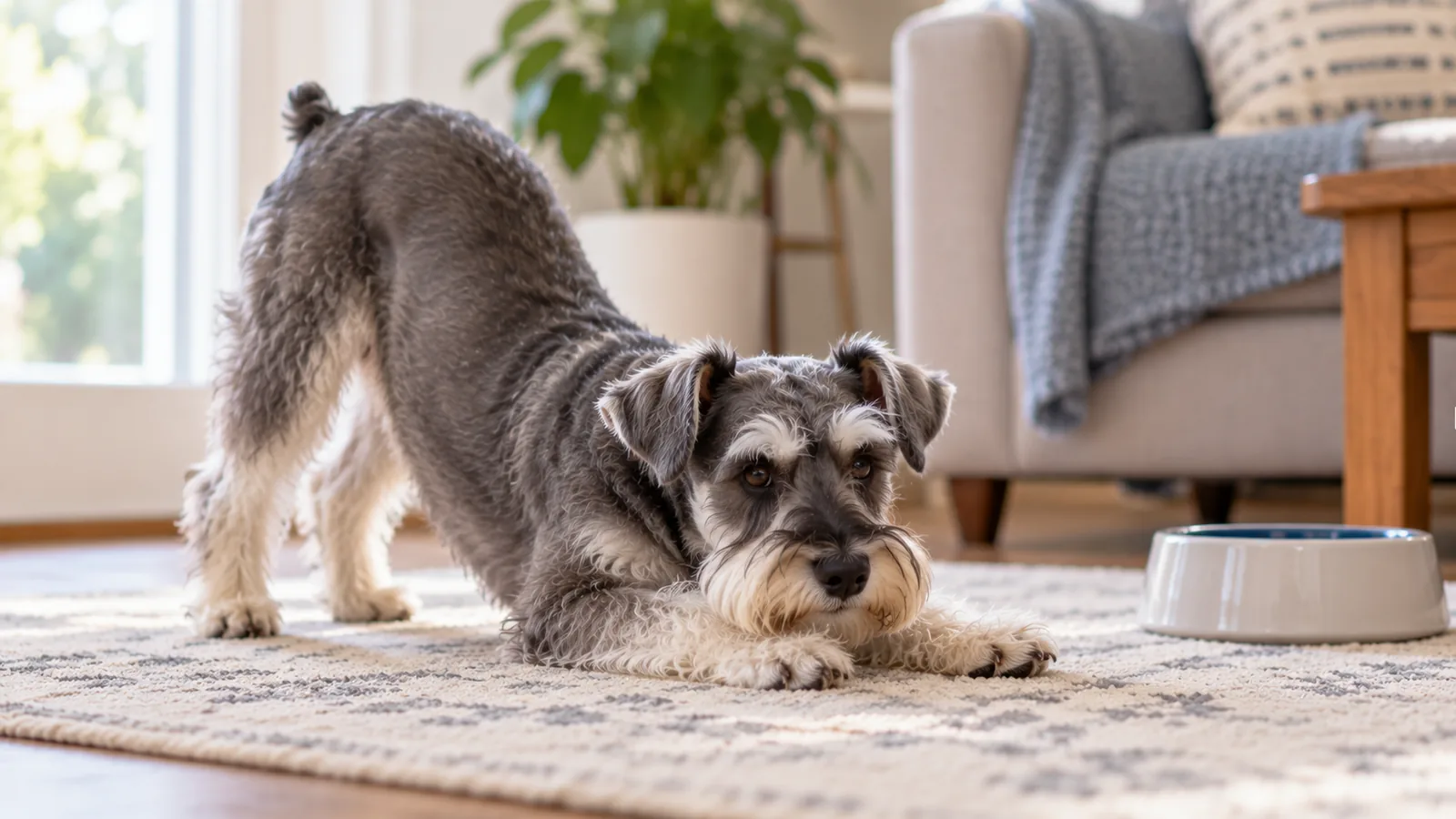
The prayer position, front end flat on the floor with the back end still in the air, is a dog stretching away abdominal pain the only way they know how. Others pace, hide somewhere new, or flinch when lifted. A dog guarding their middle is telling you something.
One round of vomiting after a fast dinner is common and usually passes. What's worth acting on is vomiting plus refusing food plus a change in posture or personality, all in the same day, because that combination tends to get worse overnight. When you're seeing it, call us right away.
When Does Pancreatitis Become an Emergency?
Some mild cases are handled on an outpatient basis with fluids, anti-nausea medication, and a recheck. The presentations that can't wait involve vomiting that keeps repeating, a dog refusing both food and water, obvious pain, or lethargy that's out of character. Those need a hands-on exam, not another hour of watching.
| What you're seeing | Why it matters | What to do |
| Vomiting that keeps repeating, or retching with nothing coming up | Fluid is leaving faster than it can be replaced | Call us during our hours, or go to a 24/7 veterinary ER if we're closed |
| No food and no water for a full day | Dehydration builds quickly without oral intake | Have your dog seen now rather than tomorrow |
| Crying, hunching, or a belly that tenses when touched | Pain of that kind reflects real inflammation | Come in; pain control is part of treatment, not an extra |
| Pronounced lethargy, weakness, or pale gums | Circulation may be affected | Emergency evaluation, whichever hospital is open |
| A history of pancreatitis with familiar signs returning | Repeat episodes can hit harder than the first | Call before the vomiting escalates |
Tacky gums, sunken eyes, and skin over the shoulders that stays tented for a beat after you lift it all point to dehydration in dogs. A dog losing fluid faster than they can take it in needs IV fluids.
Delay drives complications. Severe fluid loss, secondary infection, a body-wide inflammatory response, and permanent scarring of the pancreas all become more likely the longer inflammation runs unchecked. Dogs treated early spend less time hospitalized and go home with less lasting damage.
A few well-meant home fixes make things worse:
- Your own pain relievers are off the table. Ibuprofen, naproxen, and acetaminophen are poisonous to dogs, and an inflamed gut is the worst place for them to land.
- Skip the cabinet remedies. Pepto, human antacids, and greasy homemade bland diets all work against an organ that needs rest.
- Don't withhold water. Small amounts offered often are fine. If even that comes back up, your dog needs fluids by IV.
If you're unsure whether this is a wait or a go, schedule an urgent visit and let us make that call with you.
What Triggers Pancreatitis in Dogs?
Most episodes trace back to a handful of categories, and several often stack together in the same dog:
- Rich food and sudden diet changes: barbecue foods like rib trimmings, burger grease, and buttered corn cobs are why emergency caseloads climb every holiday weekend. A dog fed the same measured kibble daily is calibrated for exactly that, and a ladle of gravy, or a food switched overnight instead of across a week, is a shock to the system.
- Breeds that sit higher on the risk list: Miniature Schnauzers top the list of pancreatitis risk factors because the breed runs high on blood triglycerides, with Yorkshire Terriers, Cocker Spaniels, and other small breeds close behind. A Labrador is not off the hook; big dogs simply get it less often.
- Extra weight and endocrine disease: Diabetes and pancreatitis travel together in both directions, and the same goes for Cushing's disease and hypothyroidism. Carrying extra pounds adds risk on its own.
- Medications and household hazards: certain seizure drugs, some diuretics, and a few chemotherapy agents carry a known association. Give us the full list, and never stop a medication on your own. A tub of bacon grease, a dropped stick of butter, and some garden and cleaning chemicals can each set off an episode.
Around gatherings, the fix is logistics rather than willpower. Feed your dog before guests arrive, hand relatives a bag of your dog's own treats, and keep the trash behind a closed door. Before we blame the garbage can, our veterinarians go back through your dog's history, medications, supplements, and past lab results, where a repeat offender is often hiding.
What Happens During a Pancreatitis Workup?
A workup opens with an exam and a quick read on how stable your dog is, moves to lab work that includes a pancreas-specific marker, and finishes with imaging of the abdomen. Two questions drive all of it: is the pancreas inflamed, and is something else producing the same picture?
A dog who's dehydrated and hurting gets fluids and pain relief first. A pancreatic lipase test points straight at the organ, while a complete blood count, chemistry panel, and electrolytes tell us about hydration, the liver, the kidneys, and blood sugar, all of which shape the plan.
Blood work confirms that inflammation is present, but abdominal ultrasound is what shows a swollen pancreas, free fluid in the belly, and whether the liver, gallbladder, or intestines have been pulled into the problem. Imaging matters because the list of look-alikes is long: a swallowed toy causing an obstruction, gallbladder disease, an ulcer, Addison's disease, liver trouble, and intestinal cancer can each produce a vomiting dog with a sore abdomen, and a couple of those need surgery rather than fluids. Our in-house bloodwork and diagnostic imaging let us work through most of that in a single visit.
How Do We Treat Pancreatitis in Dogs?
Treatment rests the pancreas and supports the body while the inflammation resolves: intravenous fluids, anti-nausea medication, real pain control, and stomach protectants, with food reintroduced sooner than older advice suggested. Most dogs begin to look like themselves within a day or two.
| Treatment | What it does |
| IV fluids | Replaces what vomiting takes away and keeps blood flowing to an inflamed organ |
| Anti-nausea medication | Breaks the vomiting cycle, letting a dog hold down water, food, and oral medication |
| Pain management | Controls significant abdominal pain, which also helps dogs start eating sooner |
| Antacids and stomach protectants | Cut acid irritation in a gut that's already raw |
| Targeted anti-inflammatory therapy | Acts on the inflammatory cascade itself instead of only the symptoms |
Panoquell is the first medication built specifically for acute pancreatitis in dogs, and it works upstream of the damage by blocking the white blood cell activation that fuels the inflammation. Dogs started on it early tend to turn the corner sooner.
A mild case may head home within a day on fluids and medication, while a severe episode can take several days of intensive support before appetite returns. We provide fluids, injectable medication, and nursing care through our regular hours at our Council Bluffs and Glenwood locations, and a dog who needs overnight intensive care goes to a 24/7 veterinary hospital while we coordinate the handoff and pick the case back up afterward.
Feeding a Dog Through Recovery
Food used to be withheld for days. Now we get nutrition back in early, in small, frequent low-fat meals, because the gut heals faster with something to work on. Those first meals happen under monitoring, since a dog who brings the first bite back up needs a different plan than one who licks the bowl clean.
Fat content is the number that matters most when choosing the right food for a dog with a pancreatitis history, and the guaranteed analysis on the back of the bag tells you more than the marketing on the front. For some dogs, a few weeks on a prescription low-fat diet is plenty. For others, especially those with recurring flares or high triglycerides, low fat becomes the permanent plan, and we'll help you find one your dog will eat.
How Do You Prevent the Next Episode at Home?
Prevention comes down to steadiness and fat control, and most of that work happens in your kitchen rather than our exam room. The two weeks after discharge are the window where a relapse gets caught early, and daily attention at home is worth as much as anything else in the recovery.
Keeping Another Episode From Starting
The habits that last are simple:
- A veterinarian-recommended low-fat, highly digestible diet: this is the biggest lever you have, and consistency beats brand loyalty.
- Measured portions: a measuring cup or kitchen scale keeps servings honest; an eyeballed scoop grows over time.
- Simple, low-fat treats: green beans, carrot coins, or a few pieces of the daily kibble set aside for training.
- No table scraps, from anybody: one generous relative can undo a month of careful feeding.
- Steady mealtimes: two or three set meals keep digestion predictable.
- A healthy weight: gentle daily activity plus honest portions, adjusted as your dog ages.
More than half of dogs in this country carry extra weight, and pet obesity prevention matters after pancreatitis because fat tissue is metabolically active and keeps the body in a low grade inflammatory state a healing pancreas does not need.
What to Watch For in the First Two Weeks Home
Discharge day isn't the finish line. Track three things daily: how much your dog eats, how much they drink, and whether their energy is climbing back to normal.
Call if vomiting returns, appetite drops off after a good stretch, or that hunched posture comes back. Don't wait to see whether it passes. Recheck lab work or a repeat ultrasound confirms the inflammation has truly settled rather than gone quiet, and that visit is the one families skip when their dog looks fine.
What Dog Families Ask Us About Pancreatitis
My dog raided the trash last night and seems fine this morning. Should I still call?
A trash raid is worth a phone call, especially a greasy one. Signs often lag the meal by 12 to 48 hours, and a dog bouncing around at breakfast can be hunched and vomiting by bedtime. Keep that day's meals small and plain, leave water available, and watch posture and appetite. We'd much rather hear from you early than meet a severe case two days later.
Should I make my dog fast at home while they're vomiting?
Fasting a vomiting dog for a long stretch is old advice we've moved away from, because pulling nutrition delays gut healing and delays the visit where the real problem gets identified. Holding food for a few hours while you arrange an appointment is reasonable; going a full day on your own is not. Water should stay available in small amounts, and a dog who can't keep even that down needs fluids given by vein.
Does one episode mean my dog will end up diabetic?
A single episode usually doesn't cause diabetes. The risk builds with repeated inflammation, because each flare destroys a little more of the tissue that produces insulin, which is the strongest argument for taking prevention seriously after a first bout. Dogs with this history get blood sugar checked at routine visits, and increased thirst, more frequent urination, or weight loss despite a good appetite all deserve a call.
What's Your Next Move If You Suspect Pancreatitis?
The dogs we worry about most are the ones whose families talked themselves out of calling. The outlook is good when inflammation gets treated early, and the instinct telling you something is off with your dog is usually right. If your dog is vomiting, turning away from food, or holding their belly strangely, book a visit with us at The Animal Clinic of Council Bluffs and we'll sort it out together. If it's after we've closed for the day, head to the nearest 24/7 veterinary ER, and we'll pick up the follow-up from there.