

What to Expect Before and After Eyelid Surgery
If your dog squints constantly, wipes their face on the carpet twenty times a day, or seems to have a “recurring eye infection” that antibiotics keep temporarily clearing up, the problem may be more than meets the eye. Eyelid abnormalities like entropion and ectropion are among the most under-recognized causes of chronic eye discomfort in dogs and cats, partly because the symptoms overlap with so many other conditions. Catching them early matters: a dog with entropion whose lashes have been rubbing the cornea for months or years may have accumulated scarring that affects vision permanently, regardless of how well the surgical correction eventually goes.
At Animal Clinic of Council Bluffs, we serve pets at our locations in Council Bluffs and Glenwood, IA, and our comprehensive veterinary services include the surgical capabilities and diagnostic imaging needed to evaluate and correct eyelid abnormalities properly. If your dog or cat has chronic tearing, persistent squinting, or eye infections that keep coming back, contact us to schedule an evaluation and get a clear answer about what is actually going on.
What Are Entropion and Ectropion?
Both conditions involve the eyelid sitting in the wrong position relative to the eye. They cause different problems, but both are uncomfortable and both tend to worsen the longer they go without correction.
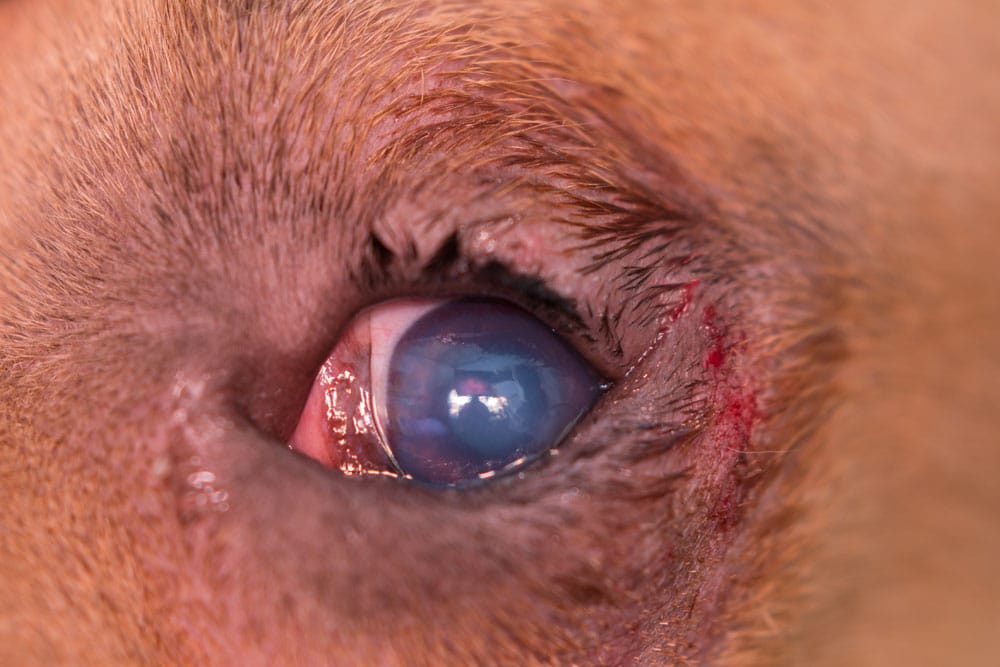
Entropion in dogs is a condition where the eyelid rolls inward, bringing fur and lashes into direct contact with the cornea with every blink. That friction causes pain, tearing, and corneal damage that accumulates steadily over time. The cornea responds to chronic irritation by developing ulcers and eventually scarring, which can permanently affect vision even after surgery corrects the anatomy.
Ectropion is the opposite: the lower eyelid sags outward, leaving the inner surface of the lid and the conjunctiva exposed to air, debris, and bacteria. Affected dogs often have chronically red, inflamed inner eyelids, thick discharge pooling in the lower lid pocket, and a tendency toward recurrent infections that temporarily respond to treatment and then return.
Many eye conditions overlap in presentation, which is why eye conditions require a full diagnostic workup rather than treatment based on appearance alone. Tear production, corneal health, eyelid position, and lash placement all need to be evaluated together to arrive at an accurate diagnosis and appropriate treatment plan. Our diagnostic services support this kind of thorough evaluation.
Which Breeds Are Most Commonly Affected?
Genetics and facial structure drive most cases of entropion and ectropion, though acquired causes exist as well.
Breeds commonly affected by entropion:
Shar Peis, Chow Chows, English Bulldogs, Rottweilers, Great Danes, Saint Bernards, Mastiffs, and Labrador Retrievers. In cats, flat-faced breeds including Persians and Himalayans are most commonly affected. Extra facial skin and deep-set eyes pull the lids inward as part of normal conformation.
Breeds commonly affected by ectropion:
Bloodhounds, Basset Hounds, Cocker Spaniels, Saint Bernards, Newfoundlands, and Great Danes. The naturally loose lower lids that give these breeds their characteristic expressions also leave the eye less protected.
Some breeds, particularly Saint Bernards and Great Danes, can develop both conditions simultaneously on different portions of the same eyelid, a presentation sometimes called “diamond eye.”
Beyond breed, eyelid position can also be altered by age-related tissue loosening, chronic eye inflammation, scarring from previous injury, and pain-induced squinting that causes the lids to roll inward temporarily. These acquired cases are distinguished from structural cases during examination and treated accordingly.
What Signs Should Prompt a Veterinary Visit?
The signs of eyelid problems are usually consistent enough that owners notice something is wrong, even when they are not sure what they are looking at.
Watch for:
- Excessive tearing or a constant stream of moisture under the eye
- Squinting or keeping one eye partially closed
- Pawing at the face or rubbing the eye on furniture or carpet
- Red, thickened inner eyelid tissue or any cloudiness on the cornea
- Thick discharge, crusting, or recurring infections that respond to treatment and then return
The presence of signs of eye pain should always be taken seriously. Eyes do not self-resolve structural problems, and delay means accumulating damage. Request an appointment if any of these signs are present.
What Happens When Eyelid Problems Go Untreated?
Untreated entropion leads to progressive corneal damage. The constant mechanical friction of lashes against the eye surface causes corneal ulcers, which are open sores on the corneal surface that are painful and susceptible to secondary bacterial infection. Chronic irritation produces corneal scarring and pigmentation that reduces clarity and vision, and in severe cases, vision loss that does not reverse with surgical correction.
Untreated ectropion causes persistent eye discharge, chronic conjunctivitis, and repeated infections that require ongoing antibiotic treatment without ever addressing the root cause. The exposed conjunctival tissue sustains drying and secondary damage that compounds over time.
Both conditions are far more straightforward to correct before secondary changes accumulate. A dog whose cornea is still healthy at the time of eyelid surgery has a better visual prognosis than one who has been symptomatic for years.
How Is the Diagnosis Made?
A complete eye examination is the starting point. We assess eyelid position with and without topical anesthetic, which helps distinguish spastic entropion caused by pain from true structural entropion. When a dog is in pain, squinting itself can pull the lids inward in a way that mimics structural entropion but resolves once the pain source is treated.
Ocular tests used during evaluation typically include a Schirmer tear test measuring tear production and a fluorescein stain test revealing corneal ulcers not visible to the naked eye. Eyelash problems like distichiasis (lashes growing from abnormal follicle locations) or ectopic cilia (lashes emerging through the inner eyelid surface) can cause nearly identical symptoms to entropion and require magnified examination to distinguish.
Treatment Options: What Fits the Situation?
Temporary Measures for Young or Developing Pets
Surgery is not always the immediate recommendation. In puppies whose faces are still developing, the final eyelid position may change significantly as they mature, and operating too early risks overcorrection. Temporary eyelid tacking uses small sutures to hold the eyelid in a more normal position, providing relief and protecting the cornea while the puppy grows. Tacking can be repeated if needed, and permanent correction is planned once the facial anatomy has stabilized.
Pets with pain-induced spastic entropion may improve entirely once the underlying source of pain is treated, without any surgical correction at all.
Permanent Surgical Repair
When the eyelid abnormality is clearly structural and the pet has finished growing, definitive eyelid surgery offers a lasting correction. The specific technique depends on which eyelid is affected, whether the problem is entropion or ectropion, the species, and the individual anatomy. The goal is to reposition the eyelid margin to its normal location without overcorrecting, which can create a new problem in the opposite direction. A conservative approach with planned follow-up allows for small adjustments if needed.
We use customized anesthesia protocols and continuous monitoring of heart rate, blood pressure, and oxygenation throughout every procedure. Our team is experienced in the careful approach these delicate surgeries require.
Feline Eyelid Surgery
Cats present differently from dogs with eyelid conditions. Entropion in cats frequently develops later in life rather than at birth, often alongside other ocular surface conditions. The surgical approach for cats may combine multiple techniques tailored to their specific anatomy and concurrent problems.
What Happens on Surgery Day?
Most owners feel less anxious once they know what to expect. The day typically proceeds as follows:
- A pre-surgical conversation confirms the planned correction and any additional steps identified during examination
- Pre-anesthetic bloodwork is recommended for older pets or those with health concerns
- The pet receives pain medication before the procedure begins, not as an afterthought
- Anesthesia is customized to the individual patient’s weight, age, and health status
- The eyelid area is carefully prepared and the correction is made with precise suturing technique
- Monitoring continues throughout recovery until the pet is awake and stable
- Owners receive updates and discharge instructions before taking the pet home
We’ll keep you updated through the day, and treat your pet like our own.
Recovery and Home Care After Eyelid Surgery
The First Few Days
Mild swelling and bruising around the surgical site are expected and typically peak around 24 to 48 hours before beginning to resolve. A small amount of clear discharge is normal. The pet may be sleepy or subdued on pain medication, which is appropriate.
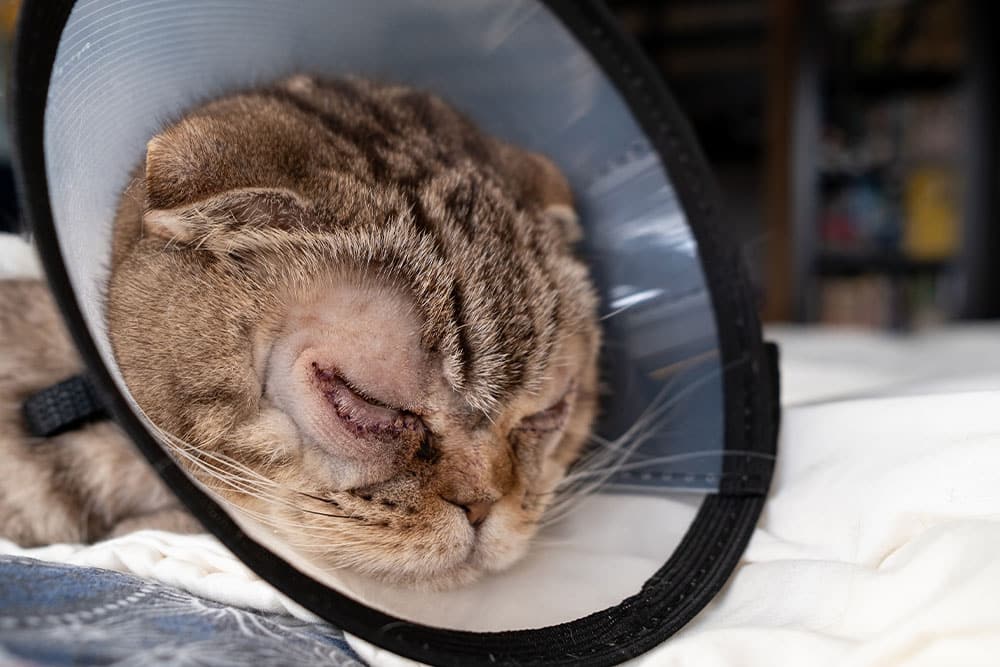
The Elizabethan collar, the cone, is essential. It is not optional. A pet who scratches or rubs the surgical site even once can disrupt sutures and compromise the result. Most pets adapt to the cone within a day or two, and it stays on until the recheck confirms the incision is healed.
Administering eye medications properly makes a significant difference in healing. The technique involves holding the eyelid open gently and placing drops or ointment on the eye surface rather than on the outer lid skin. Our team will demonstrate this before discharge.
Signs that warrant a call to us: worsening swelling beyond the expected 48-hour peak, thick yellow or green discharge, active bleeding from the incision, or loose or missing sutures. For any post-operative concern, get in touch promptly.
Healing Timeline and Follow-Up
Sutures are typically removed at a recheck appointment around 10 to 14 days after surgery. The eyelid’s final position settles over the following weeks as swelling resolves. Healing in the eyelid region progresses quickly relative to other surgical sites, and most pets look noticeably more comfortable well before the sutures come out.
A second recheck may be recommended several weeks after suture removal to confirm the correction has held and the cornea is healing as expected. Small revisions are occasionally needed when the initial result was intentionally conservative.
What Outcomes Can Owners Expect?
Most dogs and cats experience significant, obvious improvement in comfort after eyelid surgery. The squinting, rubbing, tearing, and recurrent infections that drove the diagnosis typically resolve within the recovery period. For owners who have been managing chronic symptoms for a long time, the change is often dramatic.
Factors that influence outcomes include how much corneal damage was present before surgery, the pet’s age and overall health, and how well the eyelid position correction holds over time. Pre-existing corneal scarring or pigmentation does not always completely reverse, but pain relief and protection from further damage are reliably achieved with a well-executed correction.
Owners of show dogs should note that some breed registries have rules about surgical corrections. It is worth reviewing those requirements before scheduling elective correction in a dog being shown competitively.
Ongoing wellness care and monitoring eye health after surgery ensures that any late changes are caught and addressed early.
Frequently Asked Questions About Eyelid Surgery in Pets
At what age can eyelid surgery be performed?
Permanent correction is generally recommended after facial growth is complete, typically around 12 to 18 months depending on breed size. Younger puppies can be managed with temporary tacking until their anatomy stabilizes.
Will my pet need to be under general anesthesia?
Yes. General anesthesia is required for eyelid surgery. Pre-anesthetic bloodwork helps confirm the pet is a safe candidate and allows us to tailor the anesthetic protocol accordingly.
How long does recovery take?
Most pets are significantly more comfortable within the first week. Sutures come out at 10 to 14 days, and the final eyelid position settles over the following month.
Can eyelid problems come back after surgery?
The goal of permanent surgical correction is a lasting result. Some patients require minor revisions if the initial correction was conservative, and rarely, aging or significant weight changes can affect eyelid position years later.
What if my pet already has corneal scarring?
Surgery still benefits these patients by eliminating the ongoing source of trauma. Existing scarring may not resolve, but it will no longer progress, and the eye is protected from further damage.
Getting Your Pet’s Eyes Evaluated
Eyelid conditions are among the more straightforward veterinary surgical problems to correct when addressed before significant secondary damage has occurred. The surgery is precise, recovery is relatively quick, and the relief most pets experience is immediate and lasting. We have the surgical expertise and diagnostic capabilities to evaluate and treat eyelid abnormalities properly, and we serve pets throughout the Council Bluffs and Glenwood area.
Request an appointment or contact us to have your pet’s eyes evaluated and a treatment plan developed.



Leave A Comment